Rage, Joy, and Refusal: Staying Whole When the World is Breaking
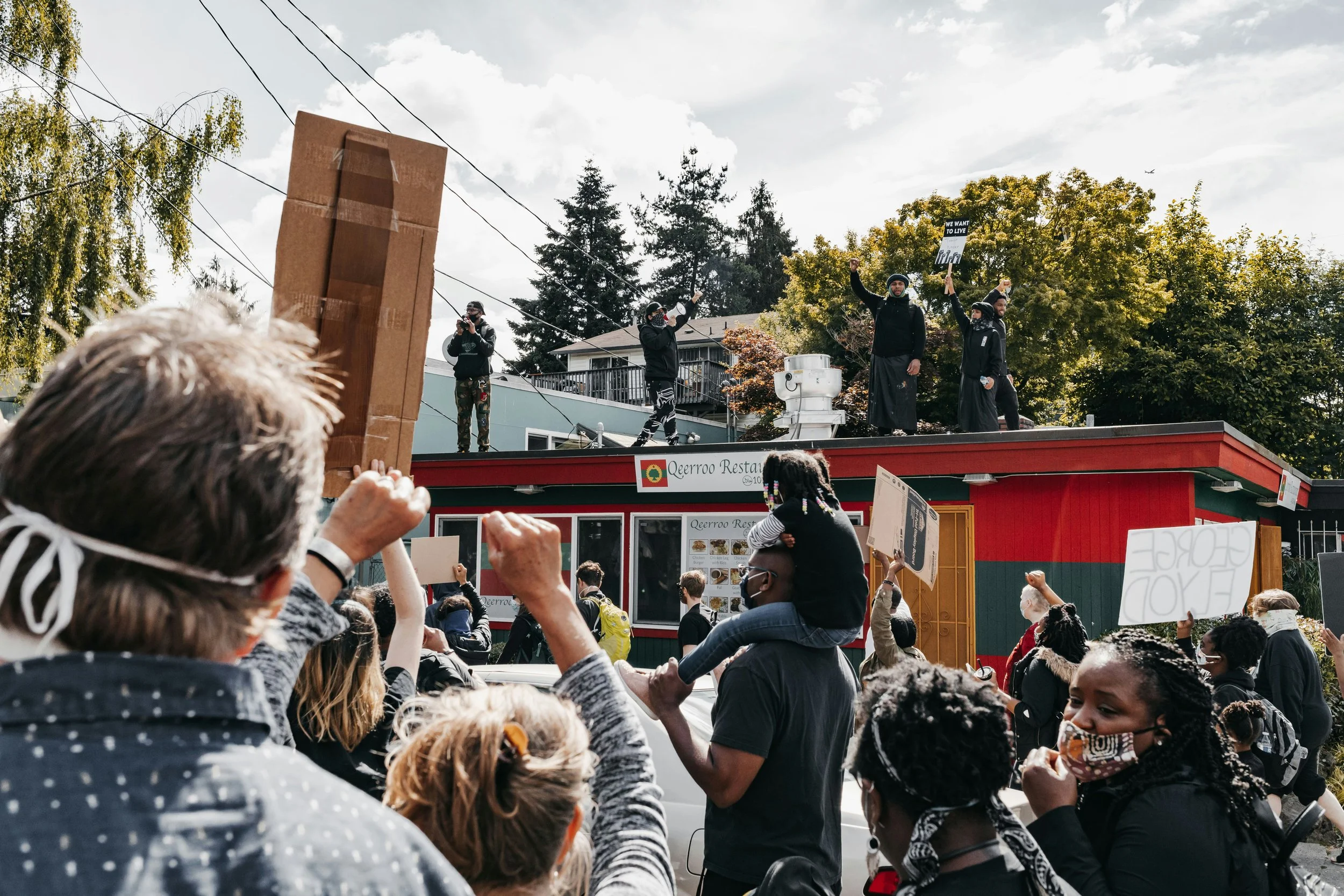
Photo by Duncan Shaffer | Unsplash
I am not blind or disillusioned by what is happening. I'm enraged.
Let me be clear about that from the jump. The hideous nature of what America has always been—what it's always done to Black people, to marginalized communities—is center stage right now, and I see it. I feel it in my bones. The dissonance of holding this chaos, of watching the world be on fire while simultaneously trying to create whimsy, to find joy, to cultivate spaces of ease—especially for Black folks who've grown up navigating this country's brutality—is real. It's visceral. And it's necessary.
This isn't about choosing ignorance over awareness. It's about refusing to let oppression infiltrate us in the most pervasive of ways. Because that's what it does. Oppression doesn't just exist outside of us in policies and systems—it tries to consume us from the inside out, to colonize our spirits, our capacity for pleasure, our ability to imagine futures where we're thriving instead of just surviving.
My role in this is to use my rage in the ways I've been purposed. And I've been suggesting to clients who are struggling with the weight of fascism that they do the same.
The Science of What Constant Exposure Does to Us
Here's what we know from the research: our nervous systems weren't designed for the 24-hour news cycle we're living in. Studies have shown that even brief exposure to negative news—we're talking just 14 minutes—can increase symptoms of anxiety and depression. When people consumed more than six hours of distressing media coverage following traumatic events like the Boston Marathon bombing, they experienced acute stress symptoms at nine times the rate of those with less exposure.
This isn't about being uninformed. This is about understanding that there's a vicious cycle at play. Research on media-induced uncertainty shows that people in crisis situations seek information to alleviate distress, but extensive media exposure actually perpetuates stress and is associated with symptoms of psychopathology. We scroll, trying to feel less anxious, and we end up more anxious. The news consumption itself becomes compulsive, driven by the need to minimize uncertainty—but it never actually delivers the relief we're seeking.
For Black folks and other marginalized communities, the impact is even more severe. A study from Washington University in St. Louis found that Black Americans experience an increase in poor mental health days during weeks when two or more incidents of anti-Black violence occur. Meanwhile, white respondents' mental health showed no significant correlation with the timing of racial violence. We are not experiencing the news—we are experiencing our lives, our communities, our ancestors' trauma replayed in high definition.
According to a survey of therapists, 99.6% said watching or reading the news can have a negative impact on mental health, with people from BIPOC and LGBTQ+ communities being particularly vulnerable. When you share an identity with the people in the news stories—when their deaths could be your death, when their children could be your children—the news isn't abstract. It's personal. It's destabilizing.
What I've Been Telling My Clients
So here's what I've been sharing with the folks I hold space for:
Channel Your Rage Into Intentional Action That Aligns With Your Capacity
Rage is information. Rage is energy. Audre Lorde taught us this. But unprocessed, misdirected rage will eat you alive. You have to move it through your body, give it somewhere to go that actually serves you and your community.
Research on Black emotions and resistance shows that anger, when channeled collectively, becomes a tool for organizing and resistance. Black communities have historically harnessed anger as a response to racism—not by suppressing it or performing respectability, but by creating counter-spaces to process it, provide mutual support, and develop strategies for resistance.
This means asking yourself: What is mine to do? Not what can I do to save the entire world by next Tuesday, but what action aligns with my actual capacity right now? Maybe it's showing up at a mutual aid effort. Maybe it's making calls to your elected officials. Maybe it's the work you're already doing—holding space for your people, creating art, raising children who know their worth. Capacity-aligned action moves you from helplessness into agency.
Manage Your Information Intake
Staying informed is important. Constant news exposure is not only distressing—it's destabilizing. The research is clear on this: there's no clear-cut division between adaptive information seeking and compulsive news consumption. What starts as wanting to stay aware can quickly become a trauma response, a hypervigilant attempt to feel safe by knowing everything.
Limit your consumption to specific times of the day. Give your nervous system breaks. This isn't about sticking your head in the sand. This is about recognizing that your body cannot be in fight-or-flight mode 24/7 without consequences. Studies on problematic news consumption have found that 73.6% of people with severe levels of problematic news consumption reported experiencing mental ill-being "quite a bit" or "very much," compared to only 8% of other participants. This same group reported significant physical ill-being as well.
You cannot pour from an empty cup, and you cannot fight from a burnt-out nervous system. Protect your capacity to stay in this for the long haul.
Use Action as an Antidote
The psychological literature on learned helplessness is instructive here. When people are subjected to situations where they perceive they have no control, they can develop a generalized belief that their actions are ineffective. This leads to passivity, resignation, and is closely linked to depression.
But here's the thing: agency is protective. A sense of control over one's actions and outcomes is crucial for mental health and recovery. When you help others, when you engage in community care, you move yourself out of helplessness and into agency. You remind your nervous system that you are not powerless, that your actions matter, that you can effect change in your corner of the world.
This doesn't have to be grand. If you have space and capacity, consider what local organizations doing work on the ground might need volunteers. Or ask what you can do to ensure folks in your community have space held for them. In my case, I run affinity spaces for Black women and offer low-cost workshops for folks navigating chronic illness who are working to reach alignment within themselves so they aren't constantly normalizing chaos.
Small, consistent acts of agency compound. They build resilience. They remind you that you're still here, still capable, still making a difference.
Joy Is Not Escapism—It's Survival
Now let's talk about the part that makes some people uncomfortable: joy.
It's easy to feel guilty for experiencing joy or focusing on self-care when others are suffering. I've heard this from so many clients, this sense that if they're not in constant pain about the state of the world, they're somehow complicit or uncaring.
But let me tell you what the research—and what generations of Black resistance—tells us: maintaining your own spirit is a radical act.
The National Museum of African American History and Culture describes Black joy as "resistance, resilience, and reclamation of Black Humanity." It's not dismissing or creating an alternate narrative that ignores collective pain. As Kleaver Cruz, founder of The Black Joy Project, explains, it's about "holding the pain and injustice in tension with the joy we experience. It's about using that joy as an entry into understanding the oppressive forces we navigate through as a means to imagine and create a world free of them."
Black joy has historically been an essential act of survival and development. When enslaved Africans held onto joy—when they sang, when they loved, when they dreamed of freedom for generations yet unborn—that wasn't naïveté. That was defiance. That was the refusal to let their oppressors have access to their spirits.
Research shows that joy serves multiple functions in marginalized communities: it acts protectively against anti-Black racism, contributes to resilience and healing from historical intergenerational trauma, and breaks cycles of trauma while preserving cultural identity. Studies of LGBTQ+ youth of color found that participants engaged in acts of detachment—deliberately stepping away from neoliberal expectations of constant productivity and emotional endurance—as a strategy for cultivating joy and resisting oppression.
Joy is not a luxury. Joy is how we survive with our humanity intact.
The goal of oppressive systems is to break our collective spirit. When you stay well, when you find moments of connection and pleasure and ease—you are pushing back against that. You are saying: You will not have all of me. You will not consume me entirely. I will not normalize the chaos you've created.
What This Actually Looks Like in Practice
So what does this look like day to day? It looks like creating boundaries around your news consumption without becoming willfully ignorant. It looks like channeling your rage into whatever action your body and spirit can sustain—whether that's organizing, creating art, showing up for your neighbors, or simply refusing to let the system break you.
It looks like holding space for Black women to gather monthly and witness each other. It looks like running workshops that help people who navigate chronic illness stop normalizing chaos and start reaching for alignment. It looks like integrating anime and pop culture into psychoeducation because joy and healing don't have to be separate, because representation matters, and because we contain multitudes.
It looks like rest. Like laughter. Like pleasure. Like refusing to be defined solely by our pain even as we honor it.
Research on everyday resistance in marginalized communities shows that these small acts of refusal—the decision to rest, to play, to experience pleasure—are forms of resistance against systems that demand our constant productivity and emotional labor. They're acts of reclaiming agency over our own bodies and spirits.
Take Care of All of You, Unapologetically
I want to be very clear: I am not suggesting toxic positivity. I am not saying "good vibes only" or pretending that everything is fine. Everything is decidedly not fine.
What I am saying is this: to sustain ourselves in the long fight ahead, we have to tend to all parts of ourselves. The enraged parts. The grieving parts. The exhausted parts. And yes, the parts that still find beauty, that still laugh, that still experience moments of lightness.
The both/and is what saves us. Rage and joy. Grief and pleasure. Awareness and rest. Resistance and care.
Studies on agency in mental health show that when individuals feel they have control over their choices—when they practice personal agency—they are more likely to take charge of their mental health, to build resilience, to reduce anxiety. Collective agency, working with others to effect change, further enhances these protective factors.
This is not about being perfect. This is not about having it all figured out. This is about refusing to let the weight of the world crush the parts of you that are still capable of wonder, of connection, of joy.
Because here's what I know after years of doing this work: A burnt-out activist is a lost activist. A depleted community member cannot sustain community care. A person who has normalized chaos in the world will normalize chaos in their own life—in their relationships, in their bodies, in their work.
We have to practice something different. We have to model something different.
The Work Continues
The world is on fire. That's true. And we are still here, still finding ways to create beauty, hold space, and imagine futures where we're free. That's also true.
Both things exist at once. The chaos and the whimsy. The rage and the joy. The weight of what we're carrying and our refusal to be consumed by it.
So yes, I see what's happening. I'm enraged by it. And I refuse to be consumed by it—because that's exactly what oppression wants. It wants us depleted, hopeless, too exhausted to resist.
Instead, I'm channeling this rage into purpose. I'm managing my information intake. I'm taking action that aligns with my capacity. And I'm holding space for joy without guilt.
I'm taking care of all of me, unapologetically.
And I'm inviting you to do the same.
Because your wholeness—your rest, your joy, your capacity to still find ease in your body even as you hold the weight of this moment—that's not a distraction from the work. That is the work. That is how we stay in this for the long haul. That is how we survive with our spirits intact.
If you're looking for support in navigating this tension between awareness and self-preservation, know that you don't have to do it alone. There are spaces being held, communities being built, and practices being developed that honor both the rage and the joy, both the grief and the resistance. Take what serves you from this, and leave what doesn't. And above all, take care.